
Stroke Survivors After 6 Months: Common Long-Term Impairments
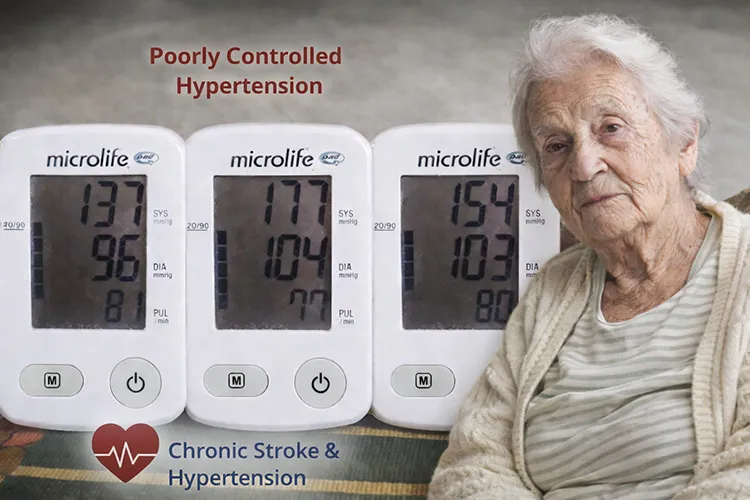
After more than 6 months post-stroke, many patients enter the chronic stage. Although the brain injury has stabilized, long-term neurological impairments often persist and significantly affect daily life and independence.
- Right-side hemiplegia with muscle weakness and spasticity
- Facial droop and reduced facial symmetry
- Speech difficulties, slurred or unclear speech
- Swallowing difficulties and choking risk
- Sleep disorders, fragmented sleep and fatigue
- Hand movement present but poor fine motor control
- Walking possible but requiring a crutch or support
Why Recovery Is Still Possible After 6 Months
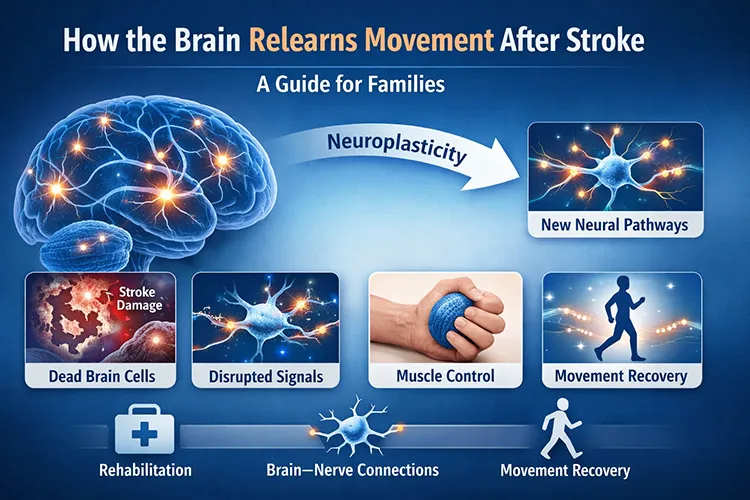
Even in the chronic phase, the brain retains its ability for neuroplasticity—the capacity to reorganize and form new neural pathways when properly stimulated.
Functional recovery depends on the ability to restore neural signaling, reduce muscle spasticity, and perform repetitive, task-specific training.
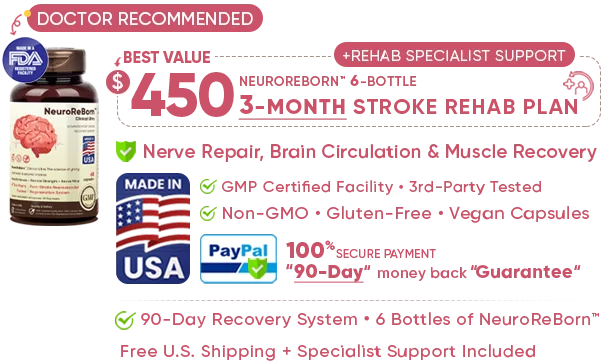
The Role of NeuroReBorn™ Clinical Ultra
NeuroReBorn™ Clinical Ultra is designed to support the neurological–muscular–motor axis, creating a biological environment that facilitates functional rehabilitation.
It does not replace physical therapy, but helps enhance the nervous system’s responsiveness to rehabilitation exercises when used consistently.
Estimated Improvement Timeline With NeuroReBorn™ Clinical Ultra
- 0 – 4 weeks: improved sleep quality, reduced fatigue, decreased muscle stiffness
- 1 – 3 months: better hand control, reduced reliance on walking aids, gradual improvement in speech and swallowing
- 3 – 6 months: improved fine motor skills, more stable walking, increased independence in daily activities
- 6 – 12 months: consolidation of functional gains and long-term quality-of-life improvement
An Important Message for Families
Recovery does not end after 6 months. With persistence and the right combination of nutritional support, targeted rehabilitation, and consistency, meaningful improvements remain achievable.
NeuroReBorn™ Clinical Ultra helps accelerate recovery progress and maximize rehabilitation outcomes compared to rehabilitation alone.