BEFORE: Post-Stroke Baseline Condition
Patient Profile: A 46-year-old male patient (identity protected), residing in Southern California, experienced a hemorrhagic stroke and underwent emergency brain surgery approximately 5 months prior.
- Cognitive Status: Fully conscious, alert, and able to communicate clearly
- Daily Function: Independent oral feeding, no swallowing difficulties reported
- Motor Function: Complete paralysis of the left upper and lower extremities
Although the patient successfully passed the acute phase, functional recovery remained complex due to unilateral paralysis and altered peripheral circulation commonly seen after hemorrhagic stroke.
DURING: Functional Observation & Multi-Point Monitoring
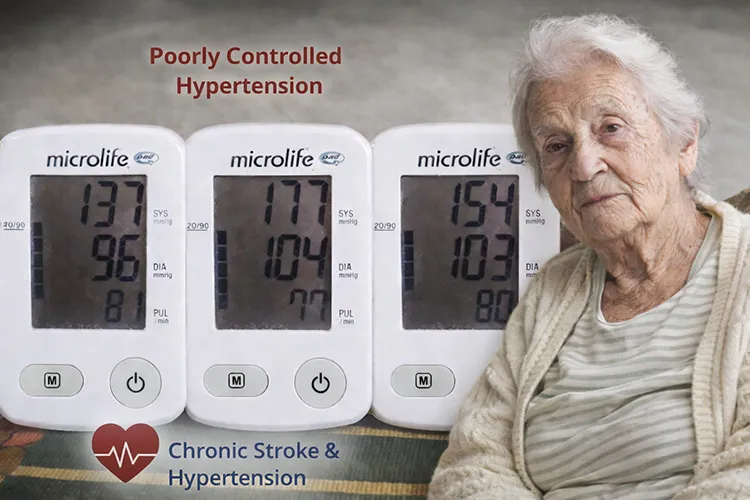
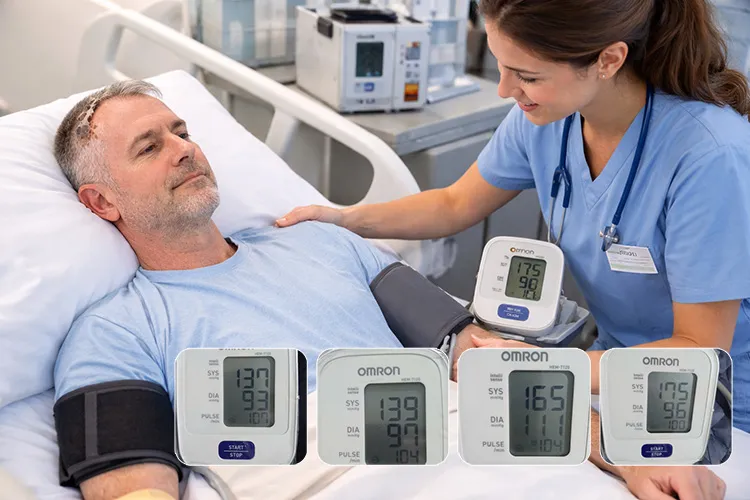
As part of a structured post-stroke care approach, clinicians implemented a multi-point peripheral blood pressure monitoring protocol to better observe functional circulation patterns.
- Left Arm: Elevated blood pressure with increased pulse rate
- Left Leg: Significantly higher blood pressure values compared to upper limb
- Right Arm: Elevated but comparatively more stable readings
- Right Leg: Markedly increased systolic pressure
These observations suggested asymmetrical peripheral circulation and potential autonomic imbalance, a common finding in post-stroke individuals with unilateral motor impairment.
MONITORING: Integrating NeuroReBorn™ Clinical Ultra
To support ongoing functional observation and rehabilitation planning, NeuroReBorn™ Clinical Ultra was introduced as part of a non-invasive monitoring and support workflow.
- Structured Monitoring: Supports consistent tracking of peripheral physiological data over time
- Trend Observation: Helps clinicians and caregivers observe functional changes during recovery
- Rehabilitation Support: Assists in organizing data to complement physical therapy planning
- Documentation: Enables systematic record-keeping as part of post-stroke care routines
NeuroReBorn™ Clinical Ultra is positioned as a supportive monitoring solution and does not diagnose, treat, cure, or prevent disease. It is designed to assist healthcare professionals and caregivers in understanding recovery dynamics throughout the rehabilitation journey.
Regulatory Notice: This content is for educational and informational purposes only. Individual outcomes may vary. Always consult licensed healthcare professionals for medical decisions.